


Warm or Buzzing Outlet? What It Usually Means — and When It Shouldn’t Be Ignored
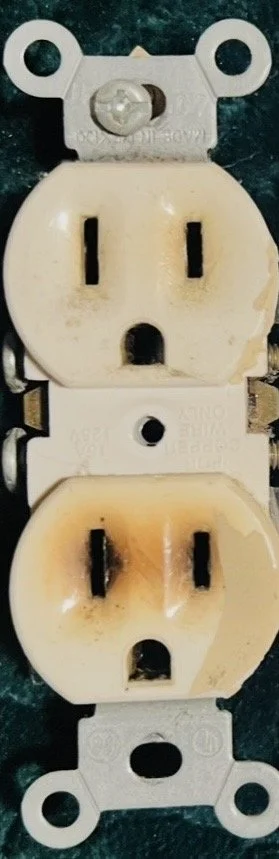
If an electrical outlet feels warm to the touch or makes a buzzing, humming, or crackling sound, most homeowners notice immediately — and often feel concerned.
That reaction is understandable. Outlets are designed to remain cool and silent during normal operation. When something feels or sounds different, it raises an important question:
Is this a harmless situation — or a warning sign I shouldn’t ignore?
This page explains why outlets may feel warm or make noise, which situations are often lower concern, and when a warm or buzzing outlet may indicate a developing safety issue — without tools, repairs, or diagnostics. In some homes, these signs may also appear alongside situations where a breaker keeps tripping, suggesting the issue may extend beyond a single outlet and involve the broader electrical circuit.
Educational guidance only.

Why a Warm or Buzzing Outlet Gets Attention
Electrical outlets are meant to operate quietly and without noticeable heat.
When an outlet feels warm or produces sound, it stands out because it differs from normal expectations. While these symptoms do not always indicate an immediate emergency, they are not considered normal and should never be dismissed without understanding what they usually mean.
In many cases, the challenge is not identifying a cause — it’s deciding how concerned to be.
Common Reasons an Outlet May Feel Warm or Buzz
Warmth or sound at an outlet is often related to electrical resistance or internal wear, even when power still appears to work normally. In some cases, the underlying issue may extend beyond a single outlet, and multiple outlets stopped working along the same circuit can be an early sign of a broader connection problem.
Common contributing factors include:
Loose internal connections
Aging outlet components
Poor contact between a plug and the outlet
Electrical load passing through worn parts
Heat buildup from extended use
Many of these conditions are not visible from the outside, which makes it difficult for homeowners to judge seriousness based on appearance alone.
When Outlet Warmth or Sound Is Often Lower Concern
In some situations, mild warmth or faint sound may be temporary and lower concern.
Examples that are often considered lower concern include:
Mild warmth during short-term use of higher-draw appliances
Brief warmth that disappears soon after unplugging devices
Faint or intermittent sound that does not worsen
No discoloration, odor, or visible damage
If the outlet cools quickly and no other symptoms are present, the situation may be less urgent — but it should still be monitored for changes.
Signs That Should Not Be Ignored
Certain patterns suggest that a warm or buzzing outlet may indicate a developing electrical hazard and deserve closer attention.
These signs don’t diagnose a specific problem, but they do suggest the situation should not be dismissed or ignored.
When to Consider Professional Evaluation
Homeowners often choose professional evaluation when one or more of the following patterns are present:
• The issue persists or worsens over time
• Symptoms occur without a clear or repeatable trigger
• Heat, buzzing, or unusual odors are present
• Power behavior becomes inconsistent or unpredictable
• The situation cannot be clearly explained through observation alone
Why These Situations Are Hard to Judge
Warm or buzzing outlets often fall into a gray area:
Power may still be working
The issue may come and go
There may be no visible damage
Online advice often jumps straight to repairs or worst-case scenarios
This leaves many homeowners unsure whether to wait, monitor, or call a licensed electrician.
The uncertainty itself is often the most stressful part.
What Homeowners Should Avoid Doing
When an outlet feels warm or makes noise, certain actions can increase risk rather than reduce it.
Homeowners should avoid:
Continuing to use an outlet that feels increasingly warm
Ignoring repeated buzzing or crackling sounds
Assuming the outlet is safe because power still works
Attempting repairs or replacements without proper evaluation
Electrical issues often develop gradually and may not show obvious damage until conditions worsen.
Want Clearer Guidance for This Gray Area?
Most homeowners don’t want to fix electrical issues themselves.
They want to understand what the situation likely means and decide what to do next.
That’s exactly why we created:
Warm or Buzzing Outlet
A Homeowner Decision Guide
This decision guide helps you:
Interpret common warmth and sound patterns
Understand which signs are typically lower concern
Recognize warning signals that shouldn’t be ignored
Decide when professional evaluation may be appropriate
No repairs.
No diagnostics.
Just clear, homeowner-focused decision support.
About the Author
This page was written for homeowners by a licensed Master Electrician with professional experience evaluating residential electrical conditions. The content is provided for general educational purposes only and is not intended to offer diagnostics, repairs, or instructions.
Important Note
This page and the related guide are provided for educational and informational purposes only. They do not provide electrical advice, diagnostics, or repair instructions and do not replace an in-person evaluation by a licensed electrician.
© 2025 SafeWireGuides.com. All rights reserved.